Sun Unleashes Barrage of Flares and CMEs, Sparking Hopes for Widespread Aurora Displays
The Sun has fired off numerous solar flares and Earth-directed CMEs, increasing the likelihood of G1-G2 geomagnetic storms. Aurora chasers could see enhanced northern lights, potentially visible in…
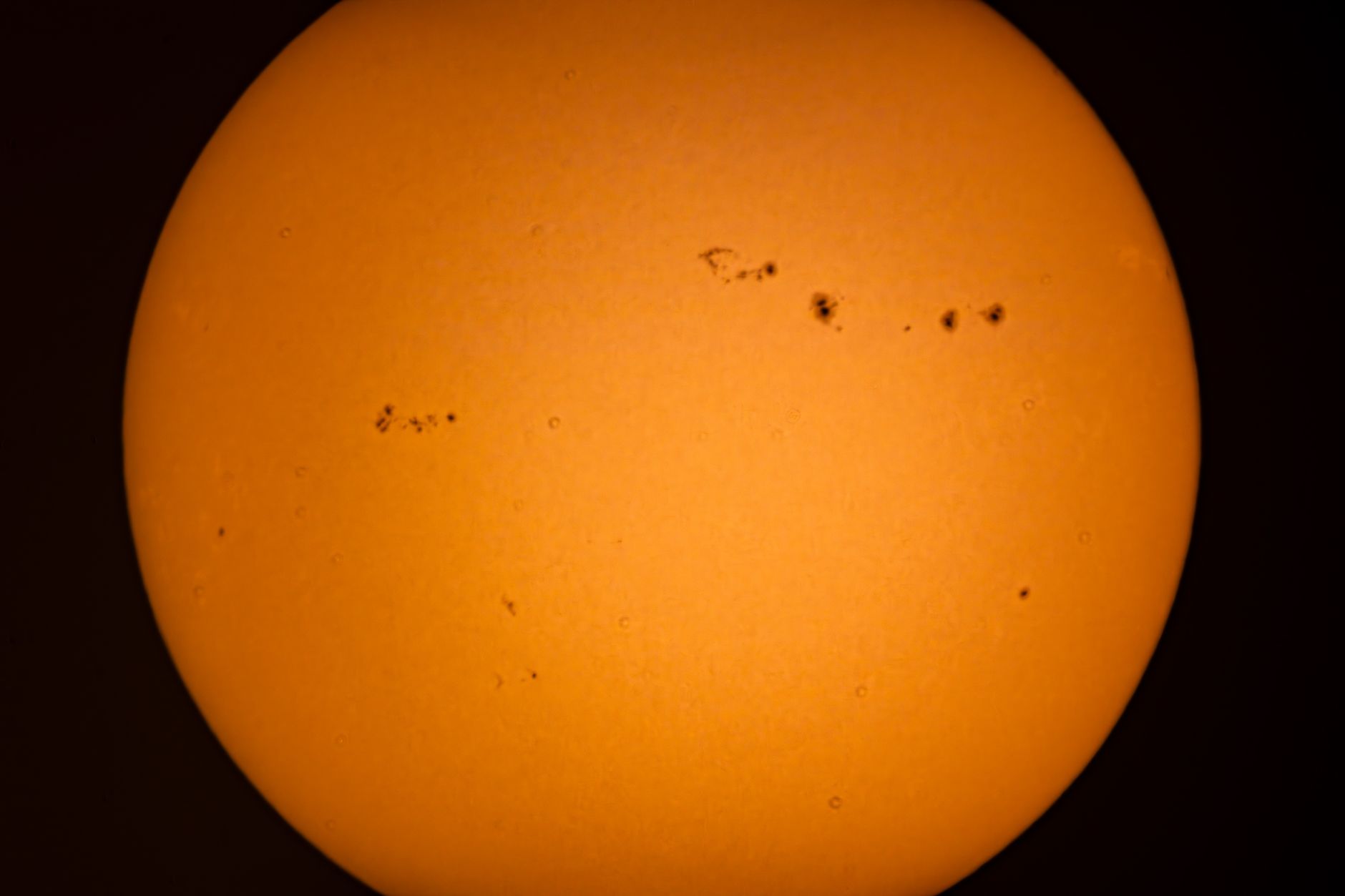
The Sun has recently erupted with an extraordinary burst of activity, including an X1.1 solar flare followed by ten M-class flares within a single 24-hour period. This intense solar bombardment has launched multiple coronal mass ejections (CMEs) into space, several of which are now hurtling towards Earth. This heightened solar activity significantly increases the chances for spectacular aurora displays, potentially making the northern lights visible to a broader audience during the upcoming July 4 holiday weekend.
What happened
Following an X1.1 solar flare on June 30, the Sun continued its remarkable activity by unleashing ten M-class solar flares within 24 hours on July 1. This rapid succession of powerful eruptions generated several coronal mass ejections (CMEs), with space weather forecasters confirming that at least some components of these plasma clouds are directed towards Earth. The sheer number and speed of these events have made precise modeling challenging for agencies like NOAA and NASA.
Forecasters anticipate moderate (G2) geomagnetic storm conditions, primarily driven by the CME from the June 30 X-class flare, with the first storm potentially arriving early on July 3. Subsequent CMEs from the July 1 barrage are still being analyzed, but they are expected to contribute to sustained geomagnetic activity. The strength and impact of these storms on Earth's magnetic field will depend crucially on the orientation of their magnetic fields upon arrival, which can either amplify or diminish their energy transfer efficiency.
Why it matters
This surge in solar activity is particularly significant for aurora enthusiasts, as it dramatically increases the probability of seeing the northern lights. With G1-G2 geomagnetic storm conditions forecast, the aurora borealis could extend its reach further south than usual, potentially becoming visible in parts of the northern U.S., such as New York and Idaho, given dark and clear skies. The timing of these events, coinciding with the July 4 holiday weekend, offers a unique opportunity for many to witness a natural light show.
The interaction of multiple CMEs arriving in quick succession could lead to prolonged or intensified geomagnetic storms, creating more vibrant and widespread aurora displays. While the exact impressiveness of the display hinges on factors like CME magnetic field alignment, the sheer volume of Earth-directed solar material makes a notable event increasingly likely. For many, this presents a rare chance to experience the awe-inspiring beauty of the auroras without traveling to extreme northern latitudes.
- Increased likelihood of seeing auroras, potentially at lower latitudes.
- Multiple CMEs could lead to prolonged or more intense geomagnetic storms.
- Coincides with a holiday weekend, offering a unique viewing opportunity.
- Short summer nights in the Northern Hemisphere may reduce visibility.
- Uncertainty in CME arrival times and magnetic field orientation affects storm strength.
- Rapid succession of solar events makes precise forecasting difficult.
How to think about it
For those hoping to catch a glimpse of the auroras, the key is preparation and staying informed. Monitor space weather forecasts from reliable sources like NOAA's Space Weather Prediction Center, which provides real-time updates on geomagnetic activity. While forecasts offer a general outlook, local conditions such as clear, dark skies away from light pollution are paramount for optimal viewing. Charge your cameras, prepare for potentially late nights, and be ready to adapt to changing conditions. Remember that even with strong forecasts, the aurora is a natural phenomenon with inherent unpredictability, so managing expectations is important while remaining hopeful for a spectacular show.
FAQ
What are CMEs and how do they cause auroras?+
Coronal Mass Ejections (CMEs) are large expulsions of plasma and magnetic field from the Sun's corona. When an Earth-directed CME reaches our planet, it can interact with Earth's magnetic field, causing a geomagnetic storm. This interaction injects energy into the magnetosphere, exciting atmospheric gases, which then emit light, creating the vibrant aurora displays in the polar regions.
How far south might the auroras be visible during these events?+
With forecasts indicating moderate (G2) geomagnetic storm conditions, the auroras could potentially be visible further south than their usual polar range. Historically, G2 storms have pushed aurora visibility into parts of the northern United States, including states like New York, Idaho, and potentially others along similar latitudes, provided sky conditions are dark and clear.
Why is forecasting difficult for such rapid solar activity?+
Forecasting becomes challenging when multiple solar flares and CMEs occur in rapid succession because the models used to predict their trajectories and impacts are designed for more isolated events. The interactions between successive CMEs, their complex magnetic field orientations, and the sheer volume of solar material make it difficult to precisely calculate arrival times, storm strengths, and the exact magnetic alignment that dictates aurora intensity.
- news·4 min readNorthern Lights Forecast: Geomagnetic Storm Offers Rare Visibility Across Northern US States
A coronal mass ejection from the sun is set to trigger a G1/G2 geomagnetic storm, potentially making the Northern Lights visible in up to 19 northern US states. Learn when and where to look for this…
- astronomy·7 min readSpace Weather and Auroras: How the Sun Shapes Our Magnetic Shield
The Sun constantly streams charged particles past Earth at hundreds of kilometers per second. When disrupted by solar flares or coronal mass ejections, this stream produces auroras, disrupts satellites, and in extreme cases can knock out power grids.
- astronomy·5 min readStargazing for Patriots: Three Celestial Targets Celebrating America's 250th
Celebrate America's 250th birthday by exploring unique night sky targets. Discover the Apollo 11 landing site, the star Spica, and the constellation Aquila, connecting history with the cosmos.