Northern Lights Forecast: Geomagnetic Storm Offers Rare Visibility Across Northern US States
A coronal mass ejection from the sun is set to trigger a G1/G2 geomagnetic storm, potentially making the Northern Lights visible in up to 19 northern US states. Learn when and where to look for this…
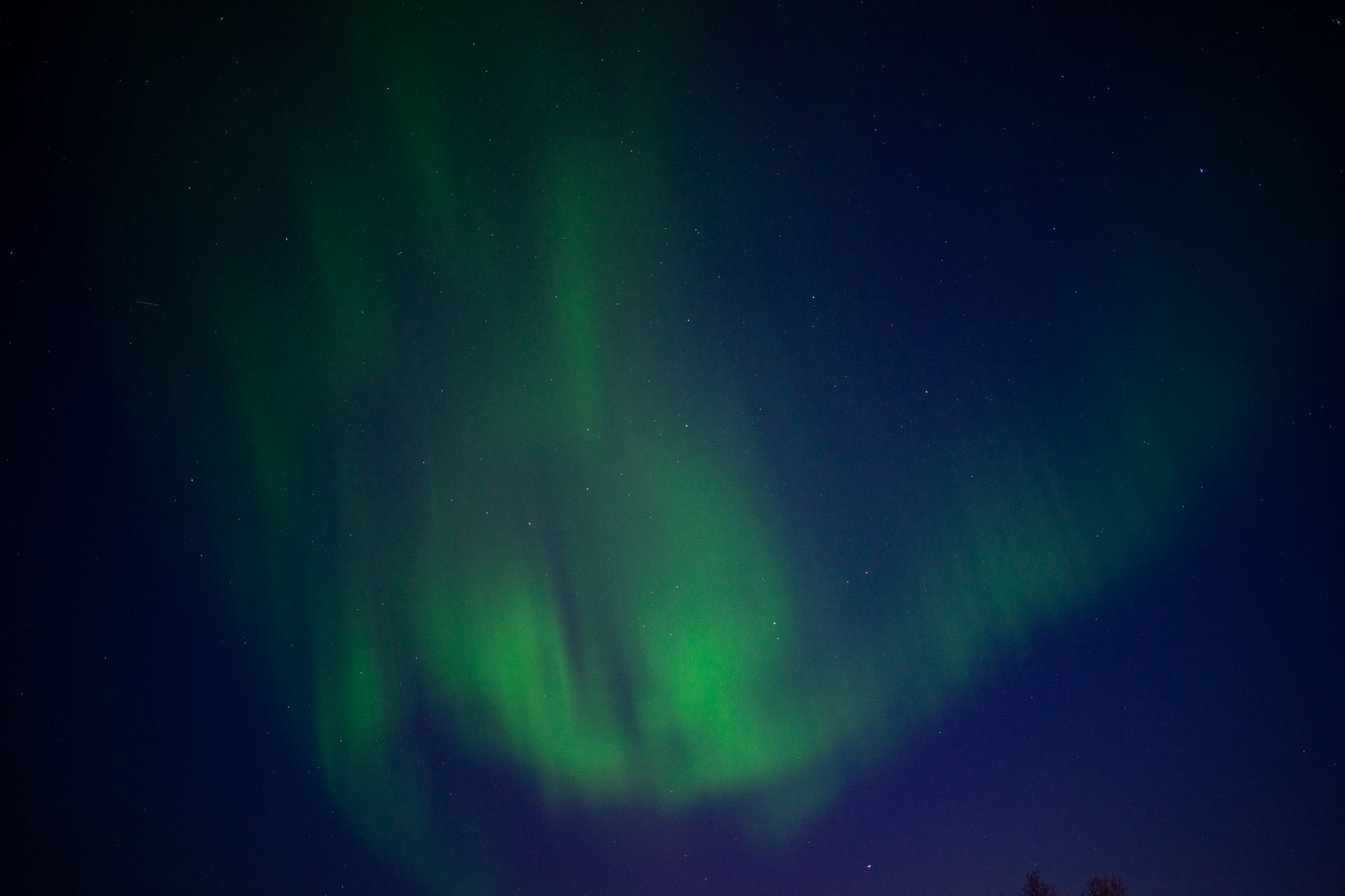
A coronal mass ejection (CME) that erupted from the sun on June 26 is expected to reach Earth between June 29 and 30, triggering a G1 or G2-class geomagnetic storm. This solar event could make the aurora borealis, commonly known as the Northern Lights, visible from parts of the northern United States, offering a rare opportunity for skywatchers. While a G1/G2 storm is not considered a major event, conditions may align for faint displays along the U.S.-Canadian border, extending the aurora's reach further south than usual.
What happened
Late on June 26, a coronal mass ejection (CME) – a significant cloud of charged particles – erupted from the sun, traveling across the solar system towards Earth. Models from NASA and other space weather agencies forecast its arrival on June 29 into June 30, which is expected to induce a G1 or G2-class geomagnetic storm. This interaction between the solar particles and Earth's magnetic field is what causes the vibrant aurora displays.
The forecast indicates potential visibility across a broad band of northern U.S. states. The nine states with the highest probability for glimpsing the aurora include Washington, Idaho, Montana, North Dakota, South Dakota, Minnesota, Wisconsin, Michigan, and Maine. Additionally, there's a possibility of aurora sightings from Oregon, Wyoming, Nebraska, Iowa, Illinois, Indiana, Ohio, New York, Vermont, and New Hampshire, bringing the total to 19 states with some chance of visibility.
Why it matters
Geomagnetic storms that bring the aurora borealis to such southerly latitudes in the U.S. are relatively uncommon, making this a notable event for space enthusiasts and the general public. While not a major storm, even faint aurora displays can be a breathtaking natural phenomenon. The ability to witness these lights without traveling to extreme northern regions provides a unique connection to the dynamic processes occurring between our sun and Earth, highlighting the constant interplay of space weather that shapes our planet's environment.
- Potential for rare aurora visibility in up to 19 U.S. states.
- Opportunity for photographers to capture faint aurora with long-exposure settings.
- Real-time forecasts and apps available to aid in visibility tracking.
- Long daylight hours post-solstice will significantly hinder visibility.
- The full Strawberry Moon will contribute to light pollution, reducing aurora brightness.
- A G1/G2 storm is not a major event, meaning displays may be faint and require optimal conditions.
How to think about it
To maximize your chances of seeing the aurora, it's crucial to manage expectations and prepare. Understand that even with a geomagnetic storm, factors like light pollution from cities, the moon's brightness, and the lingering daylight hours will make the aurora challenging to spot with the naked eye. Prioritize finding a location with a clear view of the northern horizon, far away from any artificial lights. Utilize real-time space weather forecasts from NOAA or dedicated aurora apps, which can provide up-to-the-minute data on geomagnetic activity and the crucial interplanetary magnetic field's Bz component, which dictates how easily solar energy enters Earth's magnetosphere. Patience and persistence will be key.
FAQ
What causes the Northern Lights?+
Which U.S. states have the best chance to see the aurora?+
What are the best tips for viewing the aurora?+
- astronomy·7 min readSpace Weather and Auroras: How the Sun Shapes Our Magnetic Shield
The Sun constantly streams charged particles past Earth at hundreds of kilometers per second. When disrupted by solar flares or coronal mass ejections, this stream produces auroras, disrupts satellites, and in extreme cases can knock out power grids.
- news·4 min readNASA and SBA Launch New Initiative to Boost American Space Economy and Critical Technologies
NASA and the Small Business Administration (SBA) have partnered to launch the SBIC-NASA Initiative, aiming to increase investment in critical space technologies and strengthen the American…
- news·4 min readVenezuela's Devastating Earthquakes: Rescuers Race Against Fading Survival Window for Thousands
Twin 7.2 and 7.5 magnitude earthquakes devastated Venezuela's northern coast, leaving over 1,400 dead and tens of thousands missing. Rescue efforts continue as the critical 72-hour survival window…