Nautilus Array: A New Space Observatory to Unravel Exoplanet Atmospheric Evolution
The proposed Nautilus Space Observatory, a constellation of 35 telescopes, aims to revolutionize exoplanet atmosphere studies. It will track the evolution of super-Earths and sub-Neptunes, searching…
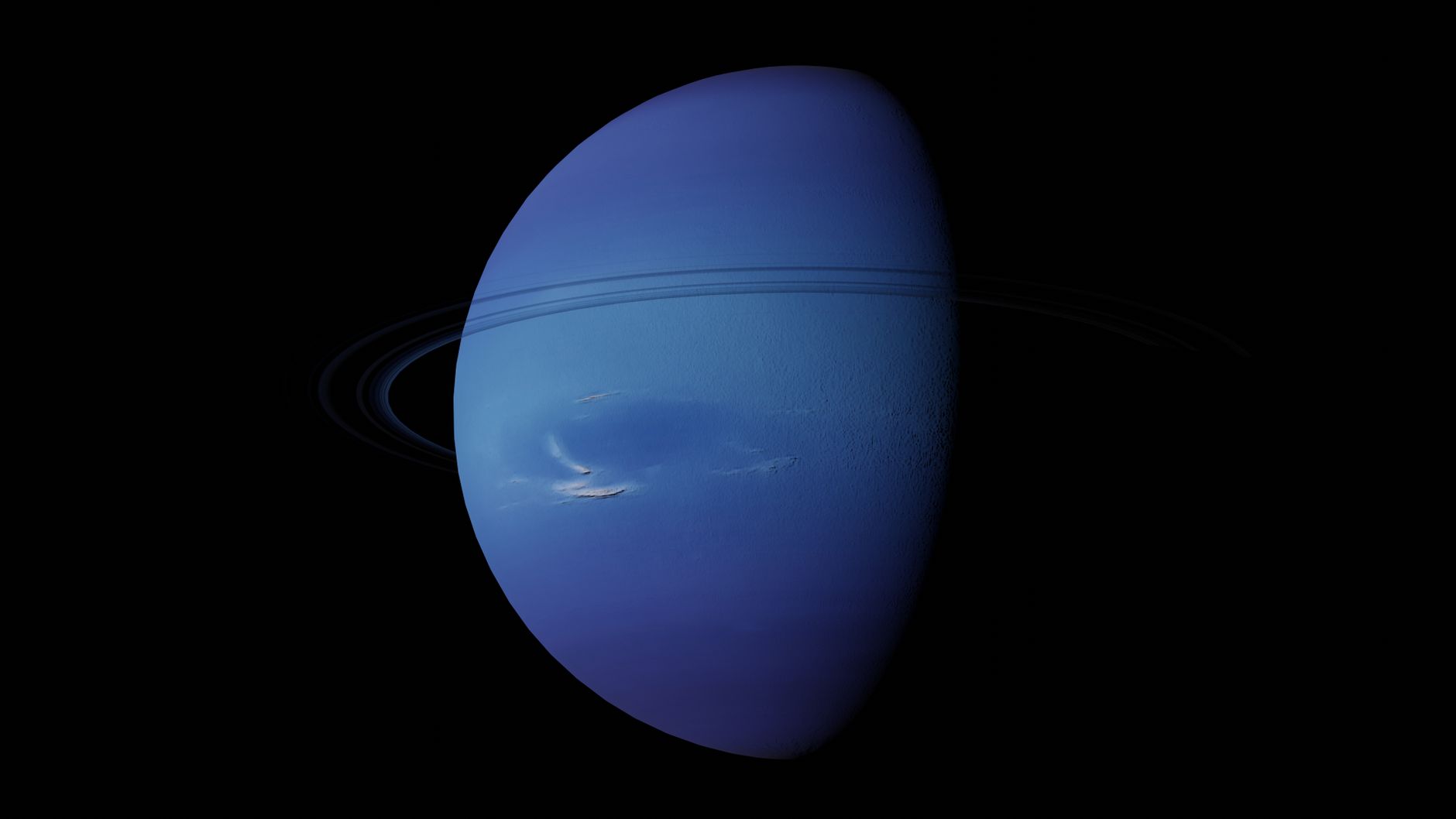
A groundbreaking concept for a new space observatory, dubbed the Nautilus Array, is poised to transform our understanding of exoplanet atmospheres and the search for life beyond Earth. This ambitious mission proposes a constellation of 35 ultralight space telescopes, designed to overcome the limitations of current observatories by employing a novel optical technology. By focusing on the formation and evolution of exoplanet atmospheres, particularly those of super-Earths and sub-Neptunes, Nautilus aims to unlock critical insights into planetary habitability and the potential for biosignatures across a vast sample of distant worlds.
What happened
Researchers from the United States and United Kingdom have proposed the Nautilus Space Observatory (NDSO), a mission concept detailed in a white paper draft. This observatory would consist of a constellation of 35 individual space telescopes, each designed for fast, simple deployment and equipped with large-diameter optics. Unlike traditional telescopes that use mirrors, Nautilus units would employ novel multi-order diffractive engineered (MODE) lenses, making them significantly lighter and less susceptible to misalignment. Each unit would feature an 8.5-meter diameter lens within a 14-meter Mylar balloon, collectively providing light-gathering power equivalent to a 50-meter mirror – far exceeding that of existing or planned telescopes like JWST or Hubble.
The primary scientific objectives of Nautilus are centered on understanding the evolution of exoplanets and their atmospheres. This includes determining the timescales for planets to evolve into super-Earths and sub-Neptunes, tracking atmospheric mass loss, characterizing the evolution of atmospheric mean molecular weight and carbon-oxygen ratios, and identifying the emergence of helium-dominated worlds. These studies would span planetary ages from nascent protoplanetary disks (0-10 million years) to fully mature systems (4.6 billion years), directly supporting NASA’s Cosmic Origins and Exoplanet Exploration Programs.
Why it matters
Currently, powerful observatories like the James Webb Space Telescope (JWST) and the Atacama Large Millimeter Array (ALMA) are advancing exoplanet atmospheric studies, but they face limitations in conducting statistical surveys across broad time ranges. Nautilus directly addresses this gap by providing high spatial resolution, broad-wavelength coverage, and a large effective area through its parallelized multiple units. This capability is crucial for isolating the physical processes that govern planetary and atmospheric evolution, which are fundamental to understanding how planets become habitable and sustain life.
Furthermore, the ability to analyze the atmospheres of up to 1,000 potentially Earth-like planets for biosignatures represents an unprecedented leap in the search for extraterrestrial life. The Nautilus concept breaks away from the decades-long challenge of scaling up traditional mirror-based telescopes, offering a new paradigm for collecting starlight and pushing the boundaries of what's possible in space-based astronomy. This innovative approach could revolutionize not only how exoplanets are studied but also how future space telescopes are designed and operated.
- Employs revolutionary multi-order diffractive engineered (MODE) lenses, offering ultralight, scalable, and potentially cost-effective optics.
- Provides unprecedented light-gathering power, equivalent to a 50-meter mirror, for detailed atmospheric characterization.
- Enables the study of atmospheres for up to 1,000 Earth-like planets, significantly advancing the search for biosignatures.
- Addresses critical gaps in understanding exoplanet atmospheric evolution across vast timescales.
- Features a modular, scalable, sustainable, upgradable, and expandable design for long-term scientific impact.
- Nautilus is currently a white paper concept and requires substantial funding and technological development to become a reality.
- Prototypes developed to date are significantly smaller than the desired 8.5-meter operational lenses.
- Requires overcoming significant engineering and deployment challenges inherent in a constellation of 35 advanced space telescopes.
How to think about it
The Nautilus Space Observatory represents a potential paradigm shift in how we approach space-based astronomy, moving beyond the traditional limitations of monolithic mirror designs. Instead of building ever-larger single telescopes, this concept proposes a distributed array utilizing novel diffractive optics. This approach underscores the growing recognition that statistical surveys of a large sample of exoplanets are essential for drawing robust scientific conclusions about planetary evolution and the prevalence of life. As a reader, consider this not just as a new telescope, but as a long-term vision for exoplanetology that could redefine our observational capabilities and accelerate the quest for understanding our place in the cosmos.
FAQ
What is the Nautilus Space Observatory?+
How does Nautilus differ from other space telescopes like JWST or Hubble?+
What are the main scientific goals of the Nautilus mission?+
- astrophysics·4 min readUnveiling the Secrets of Exoplanet Atmospheres: A Breakthrough in Biosignature Detection
New research reveals advanced techniques for identifying potential biosignatures in exoplanet atmospheres. This discovery significantly enhances our search for extraterrestrial life and habitable…
- astrophysics·4 min readWebb Telescope Unveils Surprising Chemical Signatures in Distant Exoplanet Atmospheres
Recent data from the James Webb Space Telescope is revealing unexpected chemical compositions in exoplanet atmospheres. This groundbreaking research offers new clues about planetary formation and…
- astronomy·4 min readUnveiling the Secrets of Exoplanet Atmospheres with Next-Generation Telescopes
Explore how advanced telescopes are revolutionizing our understanding of exoplanet atmospheres, revealing insights into their composition and potential for life.