June's Strawberry Moon Delights Skywatchers Globally with its Lowest Path of the Year
The June Strawberry Moon, the lowest full moon of the year for the Northern Hemisphere, captivated skywatchers worldwide. Stunning photos captured its dramatic rise across various global landmarks.
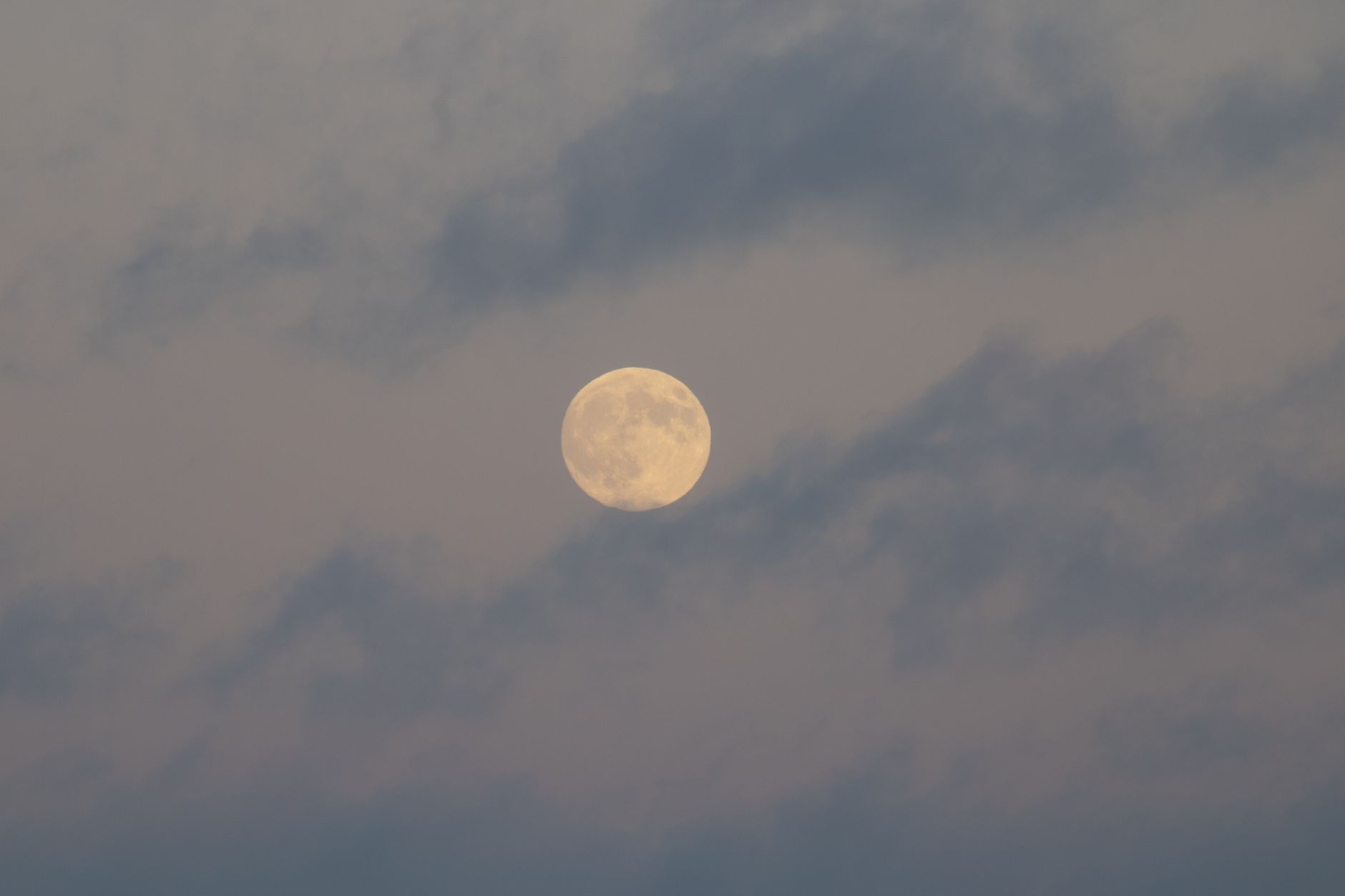
The June full moon, affectionately known as the Strawberry Moon, recently graced the night sky, offering a spectacular and unusually low-hanging display for observers across the globe. This celestial event was particularly notable for being the lowest full moon of the year for those in the Northern Hemisphere, a direct consequence of its opposition to the sun's highest path during the summer solstice. Its dramatic rise and low trajectory provided unique photographic opportunities and a memorable experience for countless skywatchers, highlighting the dynamic interplay between Earth's orbit and lunar phases.
What happened
The full moon in June, dubbed the Strawberry Moon, captivated stargazers worldwide with its striking appearance. For observers in the Northern Hemisphere, this particular full moon was the lowest-hanging of the entire year. This phenomenon occurs because a full moon always positions itself opposite the sun in the sky. Given that the summer solstice, which occurred on June 21, saw the sun follow its highest annual path, the full moon consequently took the inverse route, skimming very low across the southern horizon.
Rising in the southeast and setting in the southwest, the Strawberry Moon remained close to the horizon throughout the night. This low altitude made it an exceptional subject for photographers and enthusiasts, who captured its beauty against various iconic backdrops. Images from locations such as the Port of Molfetta in Italy, the Manhattan skyline in New York City, San Francisco Bay, and ancient sites like the Temple of Poseidon in Greece showcased the moon's vibrant orange hues and dramatic presence.
Why it matters
The annual occurrence of the Strawberry Moon, especially when it coincides with a significant astronomical alignment like the summer solstice, serves as a powerful reminder of the predictable yet awe-inspiring mechanics of our solar system. For the general public, such events foster a connection to the cosmos, encouraging engagement with astronomy and appreciation for natural phenomena. It provides a shared global experience, uniting people under the same sky, eager to witness and document its beauty.
Beyond its aesthetic appeal, the low-hanging full moon offers unique conditions for astrophotography, allowing for dramatic compositions with terrestrial landmarks. This encourages both amateur and professional photographers to hone their skills and contribute to a collective visual record of the event. Ultimately, these celestial displays reinforce the accessible nature of astronomy, proving that profound cosmic experiences are often just a glance skyward away.
- Provided a stunning and memorable visual spectacle for skywatchers globally.
- Offered unique and dramatic photographic opportunities due to its low-hanging trajectory.
- Fostered a shared sense of wonder and connection to celestial events across different cultures.
- Its low altitude might have been obscured by local terrain or city lights for some observers.
- Specific viewing conditions depended heavily on geographical location and atmospheric clarity.
- The event was transient, requiring specific timing for optimal observation.
How to think about it
When observing or anticipating celestial events like the Strawberry Moon, it's helpful to understand the basic mechanics driving them. The full moon's position relative to the sun and Earth's axial tilt are key factors. For low-hanging moons, consider your local horizon and any potential obstructions like buildings or trees. Planning your viewing location in advance, ideally with an unobstructed view towards the southeast for moonrise and southwest for moonset, can significantly enhance your experience. Remember that the moon's apparent size and color can be influenced by atmospheric conditions, with a lower moon often appearing larger and more orange due to atmospheric scattering. Embrace these natural variations as part of the unique beauty of each lunar event.
FAQ
Why was June's Strawberry Moon the lowest of the year?+
June's Strawberry Moon was the lowest full moon of the year for the Northern Hemisphere because a full moon is always opposite the sun in the sky. Since the summer solstice (June 21) marks the sun's highest path of the year, the full moon at that time takes the opposite, lowest path across the southern sky.
What is the significance of the 'Strawberry Moon' name?+
The name "Strawberry Moon" is a traditional Native American name for the full moon in June, signifying the ripening of strawberries and other fruits ready for harvest during this time of year. It's a cultural marker rather than a description of the moon's color, though low-hanging moons can often appear reddish due to atmospheric scattering.
When is the next full moon and what is it called?+
The next full moon after the Strawberry Moon will occur on July 29. It is traditionally known as the Buck Moon. This name is also derived from Native American traditions, referring to the time of year when new antlers of male deer (bucks) begin to emerge from their foreheads in a fuzzy velvet.
- astronomy·5 min readUnderstanding the June Full Moon's Unique Path: Lowest in the North, Highest in the South
Discover why June's full moon, the Strawberry Moon, rides exceptionally low in the Northern Hemisphere and high in the South. Learn about its path and connection to the Milky Way's galactic center.
- astronomy·4 min readUnveiling the Secrets of Exoplanet Atmospheres with Next-Generation Telescopes
Explore how advanced telescopes are revolutionizing our understanding of exoplanet atmospheres, revealing insights into their composition and potential for life.
- astronomy·4 min readAstronomers Uncover a Novel Class of Exoplanets Exhibiting Peculiar Atmospheric Signatures
Scientists have identified a new category of exoplanets displaying unexpected atmospheric compositions. This discovery challenges current planet formation models and opens new avenues for…