Ion Propulsion and How It Powers Deep-Space Missions
Chemical rockets are powerful but wasteful: they burn enormous quantities of propellant for a brief, violent push. Ion engines do the opposite — they push tiny amounts of propellant very efficiently over months or years, achieving velocities no chemical rocket can match. Dawn, Hayabusa, and Deep Space 1 have proven the technology. Future missions will take it further.
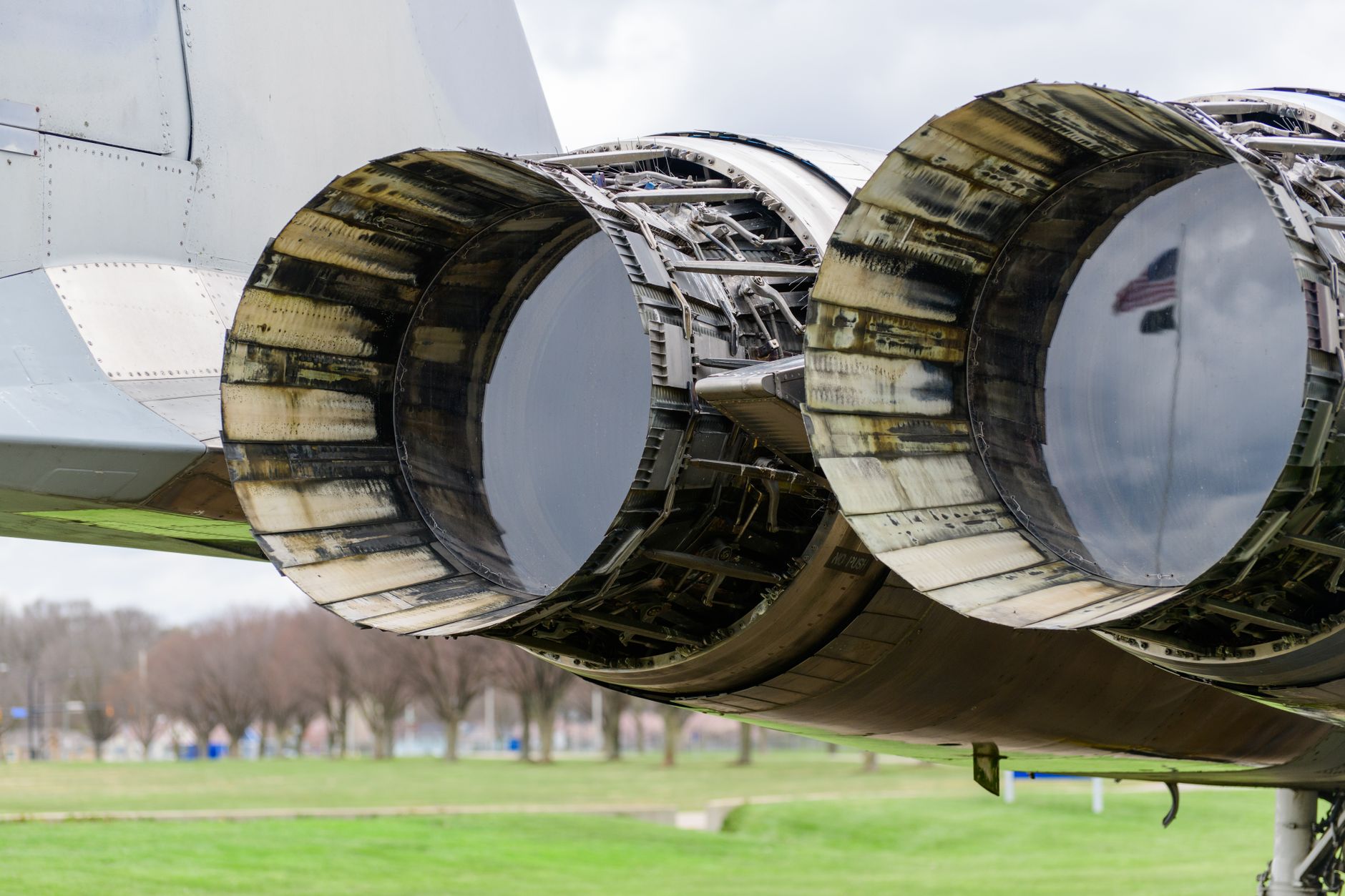
Ion engines look unimpressive because their thrust is tiny. You could balance some on your hand without feeling much. In space, however, sustained tiny thrust can beat brute force over time. Electric propulsion trades urgency for efficiency, pushing propellant particles to very high exhaust speeds and letting patience do the rest. That is why some of the most elegant deep-space missions of the modern era have ridden on ions rather than flames.
What happened
An ion engine works by ionizing a propellant, often xenon, and then accelerating those charged particles with electric fields. Because the exhaust velocity is much higher than that of chemical rockets, the engine extracts far more momentum change per kilogram of propellant. The cost is low thrust. Ion engines cannot usually lift off from Earth or perform dramatic launch maneuvers, but once in space they can run for long periods and gradually build enormous total velocity change.
NASA's Deep Space 1 validated the technology for serious mission use, and Dawn became the showcase. Using ion propulsion, Dawn orbited both Vesta and Ceres, something very difficult for a conventional spacecraft with similar mass constraints. Japanese Hayabusa missions and many satellites using Hall thrusters have further proved the broader electric-propulsion family. The technology is no longer exotic; it is an established tool where mission profiles reward high efficiency.
The main constraints are power and time. Ion thrusters need electrical power, which often means large solar arrays or potentially nuclear systems farther from the Sun. They also demand mission plans built around gradual acceleration rather than abrupt burns. But if those constraints fit the objective, electric propulsion opens trajectories and payload ratios chemical systems struggle to match.
Why it matters
Ion propulsion matters because deep-space exploration is fundamentally a delta-v problem. The more efficiently a spacecraft uses propellant, the more science payload it can carry, the more ambitious its trajectory can be, or the smaller and cheaper the mission can remain. Electric propulsion expands the design space for exploration.
It also matters for the future space economy. Cargo tugs, station-keeping satellites, orbital transfer vehicles, and eventually some crew-supporting logistics systems may all lean on electric propulsion. It is one of the clearest examples of how a technology can be underwhelming in spectacle and revolutionary in utility.
- Ion engines achieve far higher propellant efficiency than chemical rockets.
- They enable complex deep-space missions that would otherwise need much more fuel.
- Electric propulsion is already mature enough for both science and commercial applications.
- Thrust is very low, so acceleration is slow and mission timelines must accommodate it.
- The engines depend on a substantial electrical power supply.
- They cannot replace chemical launch vehicles for liftoff from Earth.
How to think about it
A useful mental model is to compare chemical rockets to a sprinter and ion engines to a distance runner. One delivers a huge burst and then stops. The other seems weak moment to moment but keeps pushing until the total performance becomes extraordinary. Mission design determines which style wins.
This helps explain why ion propulsion feels more important every year. As spacecraft become more power-rich and missions more complex, steady efficient thrust becomes increasingly valuable. Spaceflight is not always about the biggest bang. Sometimes it is about the gentlest shove applied for the longest time.
FAQ
Why are ion engines more efficient than chemical rockets?+
Can ion engines take astronauts to Mars?+
What did Dawn prove about ion propulsion?+
- spaceflight·3 min readSpaceX’s Accelerating Launch Cadence Raises Funding Demands and Industry Stakes
SpaceX’s rapid growth in launches and Starlink revenue intensifies capital needs and reshapes the commercial space market.
- spaceflight·2 min readSpaceX Q2 2026 Earnings Reveal Growth in Starlink and Mars Plans
SpaceX’s latest earnings show rising Starlink revenue and expanding launch services, signaling a boost for the commercial space sector.
- spaceflight·3 min readNASA and SpaceX evaluate strategies to avoid future lunar upper‑stage impacts
NASA and SpaceX are collaborating on mitigation techniques to prevent accidental lunar upper‑stage collisions as lunar activity expands.