Unforeseen Sensor Degradation Challenges Aether-X Exoplanet Mission's Ambitious Goals
The Aether-X exoplanet survey telescope faces unexpected sensor degradation, jeopardizing its mission to characterize potentially habitable worlds. This setback could delay crucial atmospheric data…
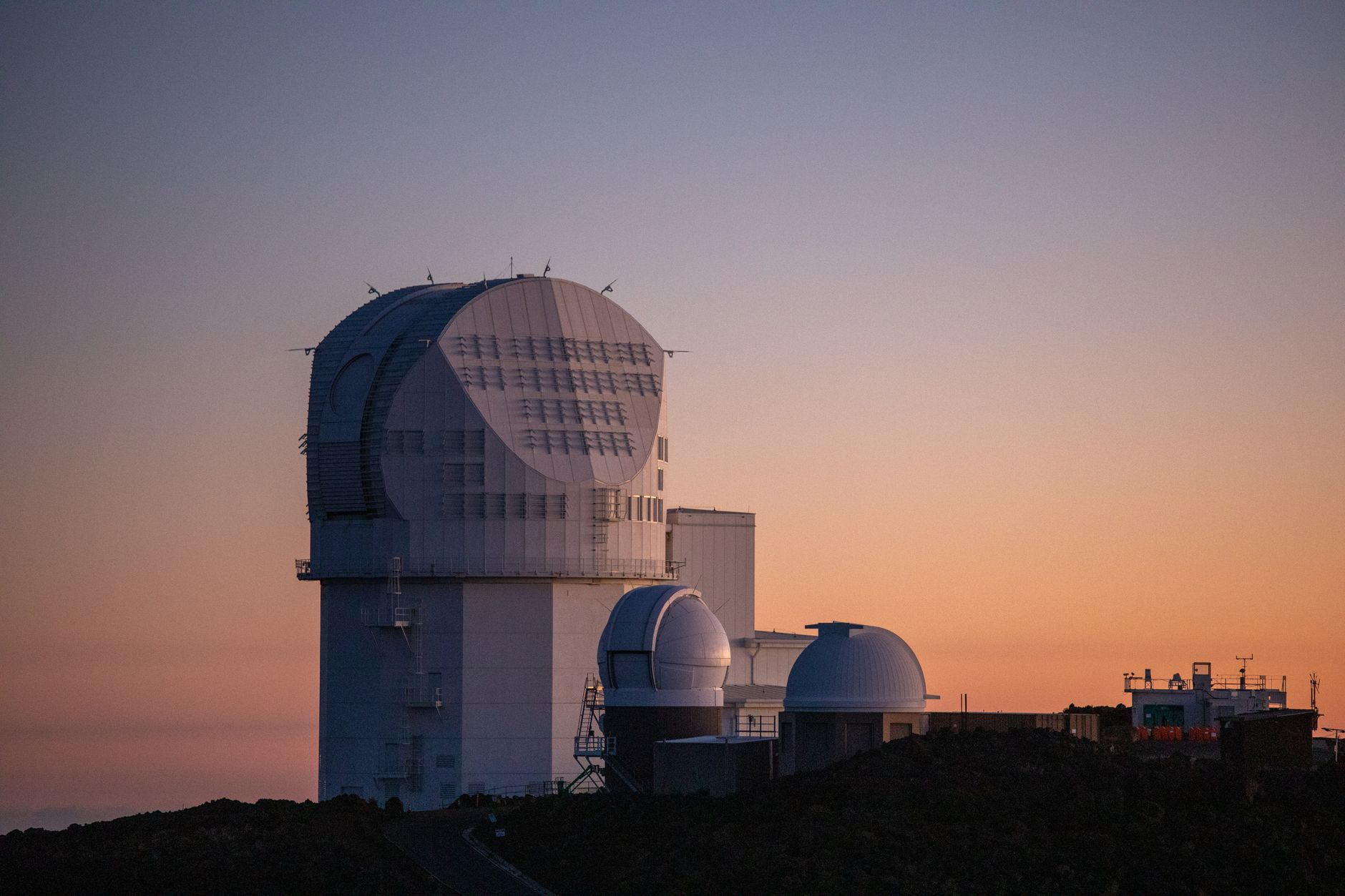
The ambitious Aether-X exoplanet survey telescope, launched with high hopes to revolutionize our understanding of distant worlds, is currently grappling with an unexpected technical hurdle. Reports indicate that several of its primary spectroscopic sensors are experiencing accelerated degradation, significantly impacting the quality and quantity of data being returned. This unforeseen challenge threatens to delay the mission's core objective: the detailed characterization of exoplanetary atmospheres, particularly those of potentially habitable planets.
What happened
The Aether-X observatory, positioned in a halo orbit around the Sun-Earth L2 point, was designed to perform high-resolution transit spectroscopy of thousands of exoplanets. Its suite of advanced instruments was intended to detect atmospheric constituents like water vapor, methane, and oxygen, crucial biosignatures. However, telemetry data has revealed a consistent pattern of signal-to-noise ratio reduction in several key sensor arrays, particularly those operating in the infrared spectrum.
Engineers suspect the degradation may stem from a combination of factors, including micro-meteoroid impacts causing subtle structural damage and unexpected levels of high-energy particle radiation affecting detector sensitivity over time. While the telescope itself remains stable and operational, the compromised sensors mean that the precision required for detecting faint atmospheric signals is diminishing faster than anticipated. This forces longer observation times for individual targets or a reduction in the overall number of planets that can be thoroughly analyzed.
Why it matters
This technical setback carries significant implications for the broader exoplanet research community. The Aether-X mission was poised to provide an unprecedented dataset, forming the backbone for future follow-up observations by next-generation telescopes. Delays in data acquisition directly impact the pace of discovery, potentially pushing back timelines for identifying promising candidates for life beyond Earth. Furthermore, the need for extensive troubleshooting and potential operational adjustments could strain mission budgets and divert resources from other critical scientific endeavors. The public, eagerly awaiting news of new discoveries, may also experience a sense of disappointment as the mission's initial ambitious goals face revision.
- Mission control is actively developing software patches and recalibration routines to compensate for sensor drift.
- Redundant sensor systems, though also affected, offer some capacity to continue observations at reduced efficiency.
- Valuable lessons are being learned about long-term sensor resilience in the deep space environment for future mission designs.
- The mission's original timeline for exoplanet atmospheric characterization will likely be extended.
- Reduced data quality may necessitate re-prioritizing targets, potentially omitting some promising exoplanets.
- Increased operational complexity and resource allocation for anomaly resolution could impact other scientific objectives.
How to think about it
When contemplating challenges like those faced by Aether-X, it's essential to remember that space exploration is an inherently difficult and iterative process. Missions operate at the very edge of technological capability, in environments that are often poorly understood and unforgiving. Rather than viewing such issues as failures, they should be seen as opportunities for learning and adaptation. Every unexpected anomaly provides engineers and scientists with critical data to refine designs, improve operational protocols, and build more resilient systems for the future. The pursuit of knowledge in space is a marathon, not a sprint, requiring patience, ingenuity, and a willingness to overcome unforeseen obstacles.
FAQ
What is Aether-X's primary scientific objective?+
Aether-X was designed to conduct high-resolution transit spectroscopy of exoplanets. Its main goal is to analyze the atmospheres of distant worlds, particularly those within their stars' habitable zones, to identify potential biosignatures and understand planetary formation and evolution.
How will the sensor degradation affect the search for extraterrestrial life?+
The degradation primarily impacts the mission's ability to precisely detect and quantify atmospheric gases, including potential biosignatures like oxygen or methane. While the search for life will continue, the reduced data quality may extend the time needed to confirm or rule out the presence of such indicators on specific exoplanets, potentially delaying groundbreaking discoveries.
What steps are mission control taking to address the sensor issues?+
Mission control teams are implementing a multi-pronged approach. This includes developing new software algorithms to correct for sensor drift, adjusting observation schedules to maximize data collection from less affected instruments, and exploring alternative observation strategies to compensate for the reduced sensitivity of the primary arrays. They are also continuously monitoring the degradation rate to predict future performance.
- astrophysics·4 min readUnveiling the Secrets of Exoplanet Atmospheres: A Breakthrough in Biosignature Detection
New research reveals advanced techniques for identifying potential biosignatures in exoplanet atmospheres. This discovery significantly enhances our search for extraterrestrial life and habitable…
- astronomy·4 min readAstronomers Uncover Nearby Super-Earth Exoplanet with Promising Habitability Indicators
A newly discovered super-Earth exoplanet, TOI-700 e, orbits within its star's habitable zone, showing potential for liquid water. This finding boosts the search for extraterrestrial life.
- astrophysics·4 min readBeyond Exoplanets: How the Solar Gravitational Lens Could Map White Dwarfs and Black Holes
New research suggests the Solar Gravitational Lens (SGL) could revolutionize our understanding of white dwarfs, black holes, and protoplanetary disks, offering unprecedented resolution far beyond…